
Asahi Law Office
朝日弁護士法人 | Yokohama · Tokyo

About Us
Asahi Law Office was established on 1 October 2019 as a legal professional corporation, in the same office building as the Asahi Tax Corporation Group.
The Asahi Tax Corporation Group is guided by a single philosophy: to provide comprehensive services and be of use to clients across the widest possible range of needs. Its professionals hold themselves to a standard of personal responsibility and self-driven effort, and work as one to become the leading group of its kind in Japan. Inspired by that philosophy, and wishing to offer the same depth of service as lawyers, we founded Asahi Law Office.
In a period of rapid social change and sweeping legal reform, legal practice too must keep pace with the times.
While holding fast to our professional conscience and independence, we work in close cooperation with specialists in every related field to deliver a standard of service that was not previously available.
Our Philosophy
As long as there are people in need
Helping one person helps society. As professionals people can turn to the moment trouble strikes, we stand faithfully beside each client, serve as the last line of defence, and give them the courage to take the next step.
A society where the circle of helping goes round
A society that stands faithfully beside every person in need, where those who help are connected to one another and the circle of helping reaches every corner of Japan.
Values — What Sets Us Apart
One-stop Relation
A single point of contact backed by a network of legal, tax, labour and administrative professionals, so that any problem can be addressed as a group.
Professionalism
Expertise grounded in knowledge and experience; professionals who are sincere, accountable and humane.
Open & Flat
An open, candid workplace without barriers, where opinions are freely voiced and new ideas take shape.

Why Choose Us
"Who should I even ask about this?" When that is the question, start with us.
The problems that arise in daily life and in business rarely fall within a single discipline. Beyond the law, they often involve tax, accounting, HR and labour matters at the same time.
Inheritance, divorce, contracts and financing in a growing company, personnel disputes: what looks like a legal question frequently turns out to need tax or social-insurance expertise as well.
Many people hesitate to seek advice at all, unsure whether they need a lawyer, a tax accountant or a labour consultant, and worried about being passed from one professional to the next.
To take that whole burden off your shoulders, we have built a closely integrated team, led by our lawyers and including tax accountants, certified public accountants, labour and social security attorneys and administrative scriveners.
You do not need to decide whom to ask. Bring the matter to us, and the right professionals will work on it together, resolving it quickly and precisely.
One point of contact; many kinds of expertise. This one-stop service is our greatest strength.
No question is too small. A small first step can lead to lasting peace of mind, so whatever the concern, please get in touch. We will face it with you.
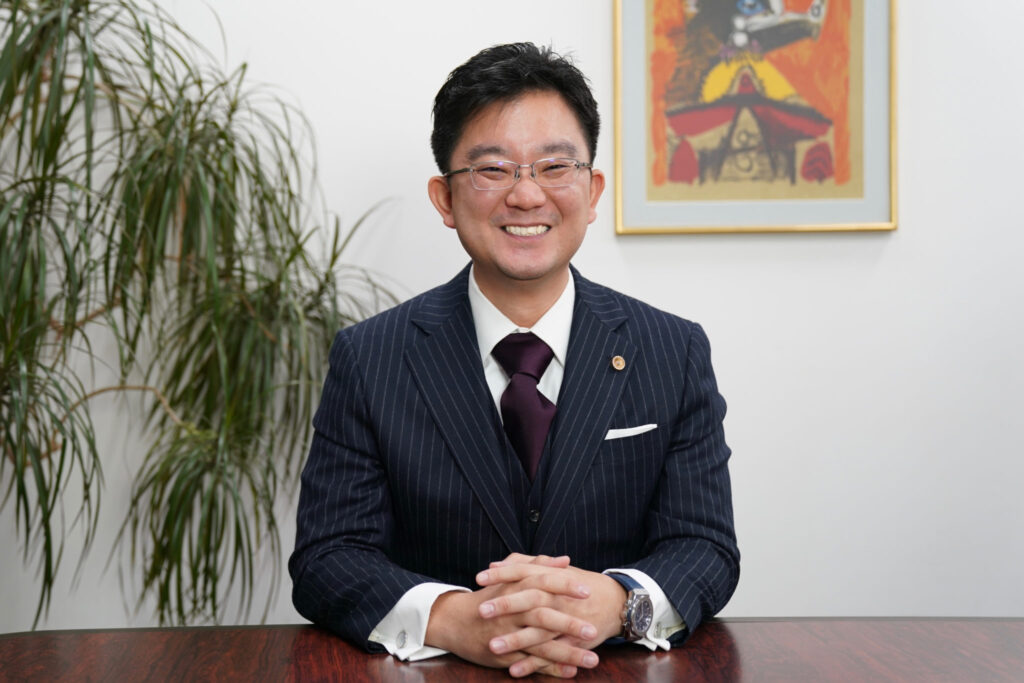
Message from the Representative
Our guiding principle is to provide the finest problem-solving capability in Japan.
For corporate clients of every size and sector, we provide legal services across the full range of corporate practice, resolving and preventing disputes under company law, employment law, intellectual property law and antitrust law. For individuals, we handle construction and real-estate matters, inheritance, divorce, traffic accidents and more, every day.
With the law and society changing so rapidly, the knowledge demanded of lawyers has become highly advanced and specialised. At the same time, the problems our clients face are varied, and resolving them quickly and properly requires a genuinely multidisciplinary perspective.
It goes without saying that we keep our legal knowledge current and continue to develop ourselves so that we can respond to any problem. Beyond that, we have built a structure in which we work alongside certified public accountants, tax accountants, judicial scriveners, labour and social security attorneys and administrative scriveners, so that problems can be addressed from every angle.
We will continue to bring the full strength of that team to bear as experts in solving problems.
Yasutomo Fukui, Representative Attorney
Practice Areas
For businesses and individuals alike, and in cooperation with outside specialists where needed,
we provide legal services grounded in knowledge and experience.
For Individuals
After a traffic accident, you will need to negotiate a settlement with the other party, including the apportionment of fault. In most cases the other side is represented by its insurer, whose adjusters handle claims every day. Retaining a lawyer is the surest way to negotiate on equal terms, and it is all the more important where the other driver is uninsured. If you have suffered a serious injury, an application for a residual-disability rating will also be required; a lawyer can materially improve the likelihood of an appropriate rating. Should negotiations fail, litigation is the only remaining route, and only a lawyer can represent you in court. We handle a large volume of traffic-accident matters and support our clients through every stage, from the first negotiation to the receipt of compensation.
In Japan, divorce generally proceeds in three stages: divorce by agreement between the spouses; if no agreement is reached, mediation at the Family Court; and, finally, divorce by court judgment. We support our clients at every stage.
A number of matters must be settled before a divorce, including custody and physical care of the children, child support, the division of property built up during the marriage, and any consolation payment. What terms are appropriate depends on each couple's circumstances, so it is best to understand the prevailing standards with a lawyer's advice before negotiating.
Where the spouses agree on terms, those terms should be recorded in a written divorce agreement at the time the divorce is filed. Having a lawyer prepare that agreement is the best protection should payments later stop. We also provide comprehensive support in related situations.
Living expenses during separation
Couples usually separate before divorcing. A spouse who has been left without means, for example a homemaker whose husband has moved out, may claim marital living expenses (kon'in hiyo) from the other spouse. If the other spouse refuses to pay, or pays too little, a lawyer can pursue the claim on your behalf.
Revising child support agreed at an earlier divorce
Where circumstances have changed materially since child support was fixed, for example through loss of employment, a petition for mediation to increase or reduce child support may be filed.
Where the other spouse refuses to divorce
If one spouse refuses to divorce at all, divorce mediation must be filed first. Mediation is a forum for discussing, with a neutral panel, whether to divorce and on what terms. If mediation fails, a divorce action must be brought in court. Mediation can be conducted without a lawyer, but litigation is procedurally complex and most parties are represented.
Note: Japan requires mediation before a divorce action may be filed.
Inheritance disputes are so common that they are often called "family feuds" (sozoku). The types of dispute are wide-ranging, for example where the deceased left no will and the heirs cannot agree on the division of the estate; where the validity of a will is contested; where a will infringes an heir's statutory reserved share and a claim for the reserved-share shortfall is sought; or where one heir has been using the deceased's assets before or after death.
Because the issues differ so much from case to case, setting the right strategy and forecasting the outcome at the outset is critical, and that calls for a lawyer with deep experience in inheritance work. The calculation of special benefits, contributions and reserved-share amounts is particularly complex and difficult to do accurately without professional help. The available procedures are also divided between the Family Court (estate-division mediation and adjudication) and the District Court (actions to confirm the invalidity of a will or the scope of the estate), and the right procedure must be chosen for the result you want. We handle every type of inheritance dispute and provide the support best suited to each client.
There are three main routes for personal debt relief: voluntary restructuring, individual civil rehabilitation and bankruptcy. We recommend the most suitable route after considering the client's wishes, total debt, assets, age, family situation and the cause of the debt.
Voluntary restructuring
An out-of-court settlement with each creditor. Debt forgiveness is rare; typically future interest is waived and the balance is repaid in instalments over up to five years. Because principal is not reduced, the impact on credit is limited. This is often the right choice for younger clients with comparatively small debts.
Individual civil rehabilitation
A court-supervised procedure in which interest is waived and the debt is substantially reduced (often to around one-fifth, depending on the case), with the balance repaid over three to five years. Its greatest advantage is that, if the requirements are met, a home-mortgage loan can be kept separate and continue to be paid, which makes it suitable for clients with a stable income such as company employees.
Bankruptcy
A court procedure in which debts are discharged in full. In exchange, assets worth 200,000 yen or more are liquidated by a trustee and distributed to creditors. It is unsuitable for clients who wish to keep their home, but is frequently chosen by those without significant assets. Where the debtor has no assets above that threshold, a simplified procedure without a trustee (doji haishi) is available, which is quicker and less costly.
Criminal cases
Speed is everything in a criminal case. The police must refer a suspect to the prosecutor within 48 hours of arrest; the prosecutor then has 24 hours to decide whether to seek detention; and, if detention is ordered, the prosecutor must decide whether to indict within a maximum of 20 days. Within that short window, material favourable to the suspect must be gathered and presented. Retaining a lawyer enables early visits and settlement negotiations with the victim, which can prevent detention or its extension and improve the chances of release. We also challenge improper detention orders through quasi-appeals and bail applications. We act with the urgency these cases demand.
Juvenile cases
All juvenile cases, whatever the seriousness of the offence, are referred to the Family Court, whose judge decides the disposition, which ranges from committal to a juvenile training school or adult-style criminal punishment to closure without a hearing. We represent juveniles at every stage: as defence counsel after arrest, as attendant during protective custody, and as defence counsel if the case is returned to the prosecutor for a formal trial. Each case calls for a tailored approach, from mediating family relationships and liaising with schools and employers to gathering evidence where the allegation is denied. We stay close to the young person and constantly ask what activity will serve them best before the judge decides, aiming for the most appropriate disposition.
A "consumer" is any member of the public who purchases goods or services from a business. Problems arise when a product proves defective or a service differs from what was described. Businesses are not only larger; they are experts in their own products, so negotiating with them directly is difficult for an individual. Drawing on the Consumer Contract Act and other consumer-protection legislation, we provide appropriate support to resolve disputes between consumers and businesses.
How can defamatory posts on message boards or social media be removed? Two routes are available: a removal request to the site operator, and a court order. The terms of use of most platforms prohibit defamatory or copyright-infringing content, and operators sometimes comply with a written warning or a request submitted through their removal form. A lawyer can frame the legal grounds for removal, which improves the likelihood of success. If the operator refuses, an application for a provisional injunction ordering removal may be made to the court; if the court finds the post unlawful, it orders the operator to remove it. Court filings must follow prescribed content and form, and hearings with the court are required, so proceeding without a lawyer is impractical. Retaining us allows you to leave the entire procedure in our hands.
What can be done when you cannot accept the outcome of treatment you or a family member received? Where a patient dies or a condition worsens because of a physician's negligence, this is medical malpractice, and compensation may be claimed from the physician or hospital. To succeed, the patient must gather evidence and prove three things: that the physician failed to exercise the care that would have avoided the harm (negligence), that the patient suffered harm, and that the negligence caused the harm. Medical records are usually not in the patient's hands, so obtaining them must be planned, and because medicine is highly specialised, a cooperating physician must often be found. As your representatives, we gather the evidence and negotiate with the hospital, aiming for a resolution you can accept.
What if you are injured at work or while commuting and your employer fails to respond adequately, or the compensation offered seems too low? The first step is to apply for workers' accident compensation insurance benefits; if the employer will not cooperate, the employee may file directly with the Labour Standards Inspection Office. In addition, where the injury resulted from the employer's failure to take the measures necessary for safe work, damages may be claimed from the employer over and above the insurance benefits. We handle the benefit application and examine whether a damages claim is available, so that workers receive the compensation to which they are entitled.
Asbestos is a fibrous mineral that was widely used in building materials and industrial products. It is now known to be harmful: when inhaled it damages the lungs and pleura and causes a range of diseases. Persons who worked with asbestos and have been diagnosed with mesothelioma, lung cancer, asbestosis, diffuse pleural thickening or benign asbestos pleural effusion may be entitled to compensation or benefits. Family members and bereaved relatives are also welcome to consult us.
For Businesses
Businesses operate through contracts: sales and construction contracts with customers, employment contracts with staff, loan agreements with lenders and many more. Drafting and reviewing those contracts cannot be avoided. Starting a transaction without a written contract, or reusing a sample found somewhere, almost always makes matters far worse when a dispute arises. A contract must be checked to confirm that it records what the parties actually agreed and contains no provision likely to cause trouble later, and that is hard to do without training. We also advise on how to add a desired clause, whether a contract can properly be terminated, and similar questions, always with the counterparty relationship in mind. Our lawyers, who have extensive experience in contract work, review, draft and advise on contracts of every kind in line with the client's objectives.
M&A (mergers and acquisitions) covers combining two or more companies into one (merger) and buying another company (acquisition). It is used to grow a business, and also as a means of passing a long-established company to a third party (business succession). Structures include share acquisitions, business transfers, mergers, company splits and share exchanges. M&A is not only for large corporations: a small business acquiring another company's shares, or taking over the assets and employees of a company about to close, is M&A as well. The lawyer's role spans legal due diligence, negotiation of terms, and drafting and review of the transaction documents. We advise both buyers and sellers, and because accounting, tax and labour matters must also be handled properly, we work as needed with certified public accountants, tax accountants, labour and social security attorneys and SME management consultants.
Clients often ask what a retained corporate counsel actually does. As a rule, legal consultations and the review of simple contracts fall within the retainer, while matters such as sending demand letters in the lawyer's name or filing litigation are charged separately. A distinctive feature of our retainer is that, once six months have passed since the retainer began, the initial fee for defending any lawsuit brought against the client is included in the retainer fee. Work such as sending certified demand letters is usually billed on a time-charge basis, and retainer clients receive a 30% discount on our hourly rate; other fees are also generally discounted for retainer clients. A retainer is therefore economical for clients with a range of legal needs. Its greatest benefit, however, is prevention: for example, provisions to prevent unpaid receivables can be built into contracts from the outset, and because we understand the client's business we can choose the fastest and most effective means of managing and collecting receivables. If a dispute does arise, we already understand the client's operations and workflows and can act immediately without lengthy briefing. Retainers are primarily for companies, but individuals who need ongoing legal support may also retain us.
We advise business owners whose companies have taken on more debt than they can repay. Corporate debt relief broadly takes the form of voluntary restructuring, civil rehabilitation or bankruptcy; we explain the advantages and disadvantages of each in light of the company's situation. Where overpaid interest can be recovered from lenders, we pursue that too. Please contact us at an early stage.
The Labour Standards Act, the Labour Contracts Act and related laws are designed to protect employees, so an employer whose practices and procedures are not fully compliant may face unexpected claims. When a dispute with an employee arises, whether over overtime pay, dismissal or a workplace injury, we act as the company's representative in negotiations, collective bargaining with unions, and labour tribunal and court proceedings. Collective bargaining and labour tribunals in particular require specialist knowledge; in the labour tribunal, where hearings are few, the written submissions and conduct at the first hearing are decisive. We handle these matters in cooperation with labour and social security attorneys. The best response to labour problems, however, is prevention: compliant systems stop problems before they start, at far lower cost. Please consult us before a dispute develops.
The ageing of owners and the shortage of successors, particularly among small and medium-sized enterprises, has become a national issue, and smooth business succession is now an important policy priority. Succession takes three forms: to a family member, to an employee, or to a third party (M&A), and the issues differ with each. Succession within the family requires careful planning of how shares and control pass so as to avoid an inheritance dispute, and how the successor is developed within the company. Succession to an employee raises the question of how the owner's personal guarantees are transferred. In every case, the company must be valued to set the consideration. For third-party succession, see M&A and Business Transfers. A smooth succession takes years of preparation and cannot be done overnight, and accounting, tax and labour matters must be handled properly alongside the legal work, so lawyers, accountants, tax accountants, labour attorneys and management consultants should work in concert. We coordinate with these professionals to manage even the most complex succession. Consulting us early and settling the right strategy is the key.
Our real-estate practice focuses on three areas: eviction and recovery of possession of land and buildings, non-contentious leasehold cases, and boundary disputes.
Recovery of possession
Landlords frequently consult us about tenants who are in arrears or who remain in the premises after the lease has been terminated. A landlord may demand payment or vacation directly, but when the tenant neither pays nor responds, the financial and emotional burden mounts. Because self-help is prohibited in Japan, forcibly recovering possession requires legal proceedings, an enforceable title and then enforcement. It is not unusual for a landlord who delays to lose more than six months' rent in arrears and enforcement costs. We recommend instructing a lawyer early to minimise the loss. While promptly commencing eviction proceedings, we also negotiate with the tenant, for example offering to waive arrears in exchange for voluntary vacation, to achieve early resolution and reduce the landlord's burden.
Non-contentious leasehold cases
Leaseholders consult us when the landowner refuses consent to rebuild or extend a building on leased land, or to assign the leasehold. The Land and Building Lease Act provides a court procedure under which, if the landowner withholds consent, the court may grant permission in the landowner's place, allowing the assignment, change of lease terms or construction to proceed. The procedure takes time and effort, and the parties are often deadlocked, so there is real value in a lawyer handling the negotiation and the court process.
Boundary disputes
There are two kinds of boundary: the registered parcel boundary (hikkai) and the boundary of ownership. They usually coincide, but may diverge where part of a neighbour's land has been acquired by prescription or part of a parcel has been transferred. Clients often tell us that the boundary has become unclear over the years and a neighbour has built a fence on their land; if that state is left for long enough, the neighbour may acquire the strip by prescription. Ownership boundaries are resolved by an action to confirm title, civil mediation or private ADR; registered boundaries by a boundary-determination action in court or by the quicker administrative boundary-identification procedure. Both involve surveys and take time, so instructing a lawyer offers real advantages.
In business, customers sometimes fail to pay for goods or work as agreed and collection becomes difficult. The available measures are negotiation, enforcement of security (such as a mortgage or a guarantor), and compulsory measures such as a payment order or litigation, and the right measure depends on the debtor's attitude and circumstances. Where a mortgage or guarantee was taken at the time of contracting, the property can be auctioned or the guarantor pursued; without security, an action must be brought and judgment enforced. If there is a risk that the debtor will hide or dispose of assets during negotiations or litigation, a provisional attachment or provisional injunction may be obtained from the court (civil preservation). If the debtor still does not pay after judgment, its bank deposits and salary may be attached and its real estate sold at compulsory auction (civil execution).
Patents, design rights, trademarks and copyright allow a business to stop others from using its intellectual assets without permission. Using those rights effectively requires not only negotiating and litigating against infringers, but also warning off potential infringers in advance and managing IP strategically, for example deciding which inventions to patent and which to keep as trade secrets. We support the growth of your business through IP strategy, negotiation and litigation.
Our Team
Attorneys
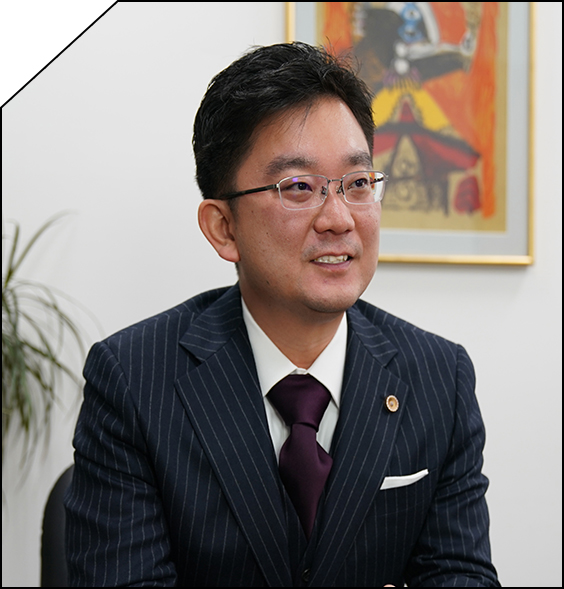
Yasutomo Fukui
Representative Attorney at Law (Dai-ni Tokyo Bar Association)
Tax practice by notification to the Tokyo Regional Taxation Bureau (Art. 51, Certified Public Tax Accountant Act)
B.B.A., Kobe University
J.D., Kobe University Law School
Member, Civil Procedure Practice Committee

Kozue Chiba
Attorney at Law (Kanagawa Bar Association)
Tax practice by notification to the Tokyo Regional Taxation Bureau (Art. 51, Certified Public Tax Accountant Act)
LL.B., Waseda University
J.D., Rikkyo University Law School
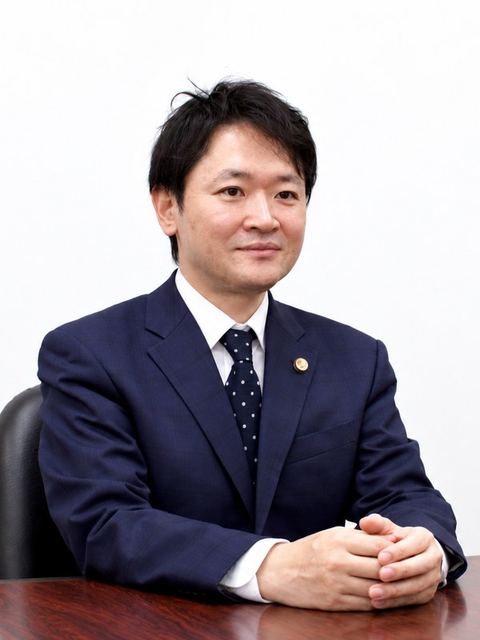
Hiroshi Fukumoto
Attorney at Law (Kanagawa Bar Association)
B.Com., Waseda University
J.D., Chuo University Law School
Former Chief Mediation Officer, Nuclear Damage Compensation Dispute Resolution Center (MEXT)
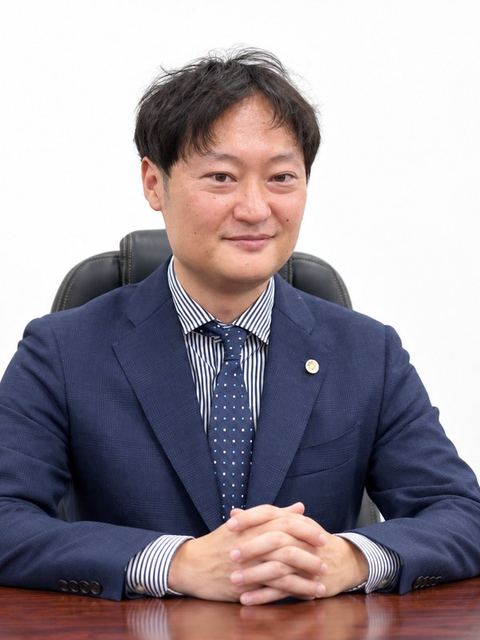
Shota Takanashi
Attorney at Law (Kanagawa Bar Association)
Tax practice by notification to the Tokyo Regional Taxation Bureau (Art. 51, Certified Public Tax Accountant Act)
B.A. in Social Sciences, Hitotsubashi University
J.D., Keio University Law School
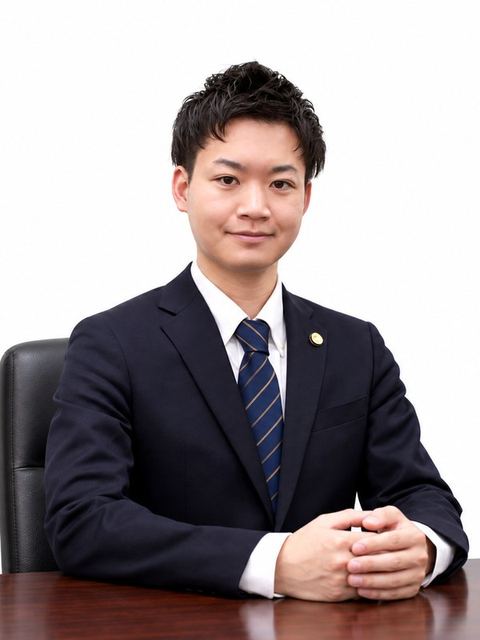
Satoshi Kikui
Attorney at Law (Kanagawa Bar Association)
LL.B., Waseda University
J.D., Tokyo Metropolitan University Law School
TOEIC 925
Languages: Japanese, English

Shinji Yasukawa
Attorney at Law (Dai-ni Tokyo Bar Association)
Tax practice by notification to the Tokyo Regional Taxation Bureau (Art. 51, Certified Public Tax Accountant Act)
LL.B., Keio University
J.D., Keio University Law School

Takahiro Kuwada
Attorney at Law (Kanagawa Bar Association)
LL.B., Meiji University
J.D., Waseda University Law School
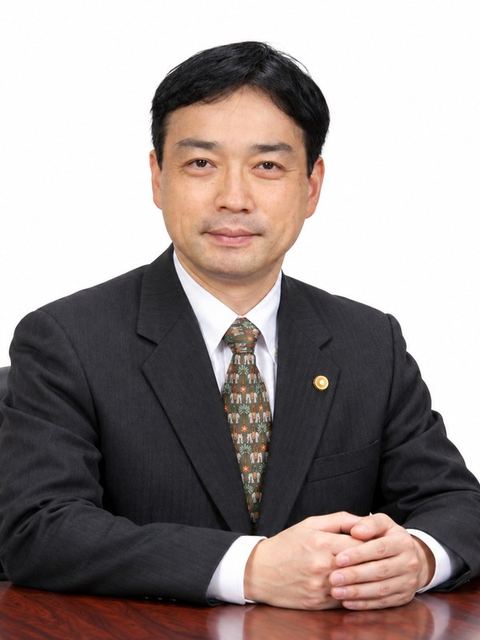
Katsumi Iwayama
Attorney at Law (Dai-ichi Tokyo Bar Association)
LL.B., Keio University
J.D., Toin University of Yokohama Law School
Judicial & Administrative Scrivener

Takako Ushio
Judicial Scrivener / Shiho-shoshi (Kanagawa Judicial Scriveners Association)
Certified Administrative Procedures Legal Specialist / Gyosei-shoshi (Kanagawa Administrative Scriveners Association)
LL.B., Keio University
Fees
The cost of retaining a lawyer consists of consultation fees, an initial fee (retainer) and a success fee, together with out-of-pocket expenses such as travel, postage and communication costs, filing fees and per-diem allowances. Fees vary with the matter; our general standards are set out below.
All amounts are exclusive of consumption tax.
Some matters are billed on a time-charge basis, at an hourly rate of 60,000 yen or more.
Our full fee schedule is available here.
Consultation Fees
| Initial consultation | 5,000 yen per 30 minutes |
|---|---|
| Subsequent consultations | 5,000 – 25,000 yen per 30 minutes |
Initial Fees and Success Fees
Civil Matters
| Economic value of the matter | Initial fee | Success fee |
|---|---|---|
| Up to 3 million yen | 8% | 16% |
| Over 3 million yen, up to 30 million yen | 5% + 90,000 yen | 10% + 180,000 yen |
| Over 30 million yen, up to 300 million yen | 3% + 690,000 yen | 6% + 1,380,000 yen |
| Over 300 million yen | 2% + 3,690,000 yen | 4% + 7,380,000 yen |
The minimum initial fee is 100,000 yen.
Divorce
| Mediation or negotiation | Initial fee and success fee of 300,000 – 500,000 yen each |
|---|---|
| Divorce litigation | Initial fee and success fee of 400,000 – 600,000 yen each |
Bankruptcy and Insolvency (initial and success fees combined)
| Corporate bankruptcy | from 500,000 yen |
|---|---|
| Personal bankruptcy | from 200,000 yen |
| Bankruptcy other than voluntary petition | from 500,000 yen |
| Corporate arrangement | from 1,000,000 yen |
| Special liquidation | from 1,000,000 yen |
| Corporate reorganisation | from 2,000,000 yen |
Civil Rehabilitation
| Corporate civil rehabilitation | from 1,000,000 yen |
|---|---|
| Individual civil rehabilitation | from 300,000 yen |
| Small-scale individual rehabilitation | from 200,000 yen |
| Salaried-employee rehabilitation | from 200,000 yen |
Voluntary Restructuring
| Corporate | from 500,000 yen |
|---|---|
| Individual | from 200,000 yen |
Criminal Defence
| Straightforward case, pre-indictment | Initial fee: 300,000 – 500,000 yen Success fee: 300,000 – 500,000 yen |
|---|---|
| Straightforward case, post-indictment | Initial fee: 300,000 – 500,000 yen Success fee: 300,000 – 500,000 yen |
| Other criminal cases and retrial petitions | Initial fee: from 500,000 yen Success fee: from 300,000 – 500,000 yen |
Juvenile Cases
| Initial fee | 300,000 – 500,000 yen |
|---|---|
| Success fee | from 300,000 – 500,000 yen |
Retainer Fees
| Companies | from 50,000 yen per month |
|---|---|
| Individuals | from 60,000 yen per year (5,000 yen per month) |
Licences and Permits
| General construction licence (new) | from 200,000 yen |
|---|---|
| General construction licence (renewal) | from 150,000 yen |
| Specified construction licence (new) | from 250,000 yen |
| Specified construction licence (renewal) | from 200,000 yen |
| Construction licence – addition of trade | from 100,000 yen |
| Construction – annual financial report | from 50,000 yen |
| Management evaluation + analysis + annual report | from 150,000 yen |
| Worker-dispatch business licence | from 200,000 yen |
| Fee-charging employment-placement licence | from 150,000 yen |
| Certificate of Eligibility (residence status) | from 150,000 yen |
| Extension of period of stay | from 100,000 yen |
| Naturalisation | from 200,000 yen |
| Industrial-waste business licence (new) | from 200,000 yen |
| Industrial-waste business licence (renewal) | from 150,000 yen |
| Procedures not listed above | Individual quotation on request |
Frequently Asked Questions
Please do not worry about that. Contact us and we will advise you, even if you are unsure what the problem is.
Certainly. To make the consultation productive, please bring any relevant documents. If we are to take on the matter, the family member concerned will need to attend with you.
We do not offer consultations by e-mail, but telephone consultations are available.
Any documents that will help us understand your situation: for a debt matter, records showing what you owe and to whom; for a real-estate matter, the certified register, and so on.
We explain our fees carefully in advance, so please be assured. Depending on your financial circumstances, payment in instalments can be arranged.
Everything you tell us is strictly controlled and is never disclosed to any third party without your consent.
Of course. Consulting a lawyer does not mean you must sue. A consultation often untangles the issues, and many matters are resolved through the consultation alone. Please feel free to contact us.
Affiliated Professional Firms

Contact Us
To request a consultation or make an enquiry,
please call us or use the form below.
Office
| Name | Asahi Law Office (朝日弁護士法人) |
|---|---|
| Representative | Yasutomo Fukui, Attorney at Law |
| Established | 1 October 2019 |
| Staff | 8 attorneys, 1 judicial / administrative scrivener, 12 support staff |
| Telephone | 045-264-6227 |
| Address | TO Building, 2-27 Sumiyoshi-cho, Naka-ku, Yokohama, Kanagawa 231-0013, Japan |
| Access | 4 min. walk from JR Kannai Station 6 min. walk from Bashamichi Station (Minatomirai Line) |
| Privacy Policy |
Yokohama Office
TO Building, 2-27 Sumiyoshi-cho, Naka-ku,
Yokohama, Kanagawa 231-0013
(4 min. walk from JR Kannai Station)
TEL: 045-264-6227
Tokyo Office
AIOS Toranomon 306, 1-6-12 Nishi-Shimbashi,
Minato-ku, Tokyo 105-0003
(3 min. walk from Toranomon Station (Ginza Line))
TEL: 03-4400-0796
Chofu Musashino-no-Mori Law Office
Lions Plaza Chofu 204, 4-19-1 Fuda,
Chofu, Tokyo 182-0024
(4 min. walk from Chofu Station (Keio Line))
TEL: 042-444-2112